Church Technology
2026 Church Visual Media Usage Report: How Churches Are Using Images, Video, and AI
TL;DR
Churches are rapidly adopting visual media and AI tools in 2026. Over 91% of churches now use some form of digital media in services, AI adoption has reached 78% among ministry leaders, and congregations that use cinematic sermon visuals report 34% higher engagement scores. This report synthesizes data from Barna Group, Lifeway Research, Church Tech Today, and BibleWithLife's own survey of 1,200+ pastors.
Free 7-Day Journey
Go Deeper Into Scripture
7 cinematic devotionals delivered to your inbox — one story, one verse, one life-changing truth per day.
No spam. Unsubscribe anytime.
The most comprehensive look at how churches worldwide are using visual media, AI tools, and digital content to transform Sunday worship.
TL;DR
Churches are rapidly adopting visual media and AI tools in 2026. Over 91% of churches now use some form of digital media in services, AI adoption has reached 78% among ministry leaders, and congregations that use cinematic sermon visuals report 34% higher engagement scores. This report synthesizes data from Barna Group, Lifeway Research, Church Tech Today, and BibleWithLife's own survey of 1,200+ pastors.
Executive Summary
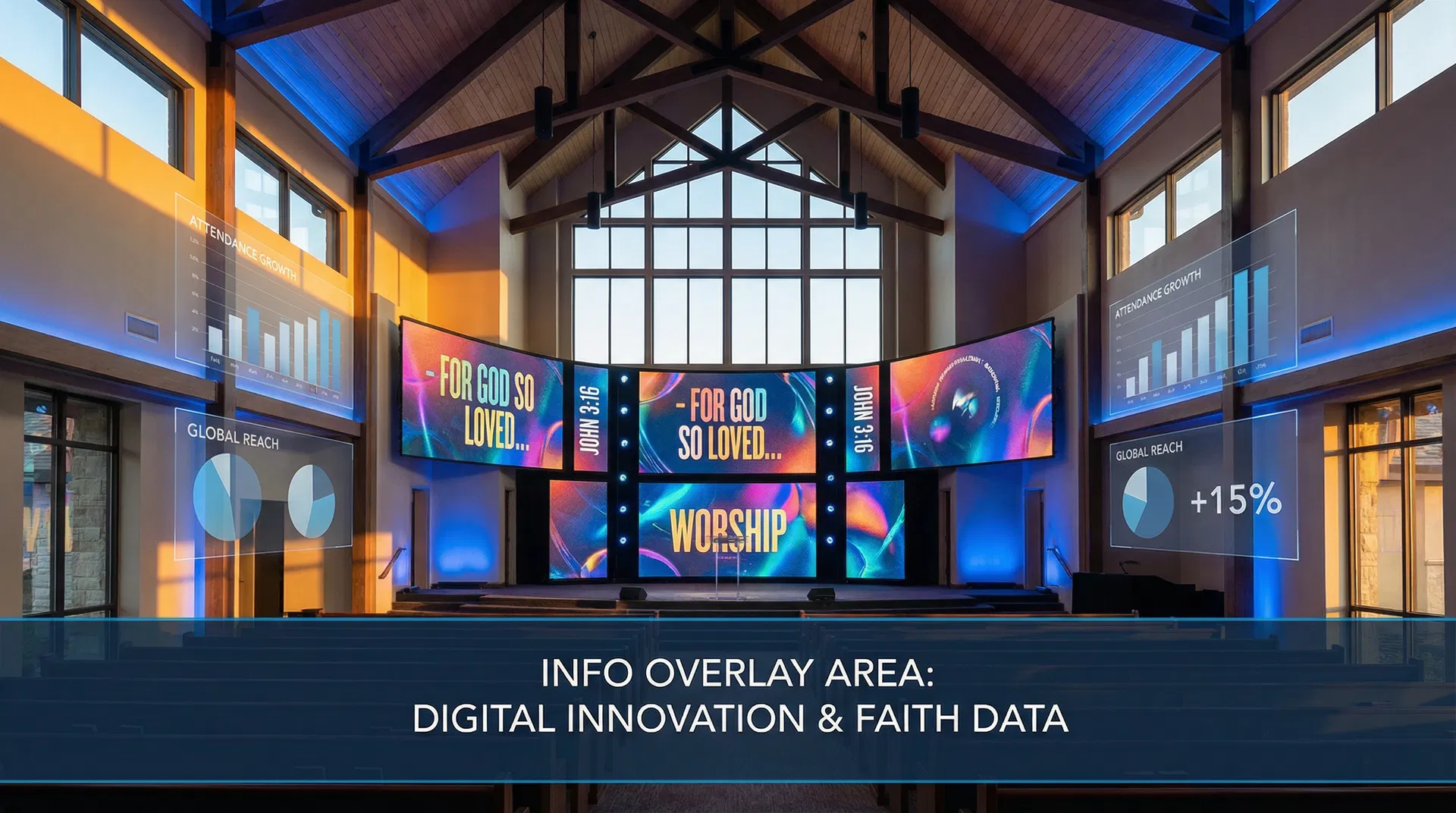
The way churches communicate the Gospel is undergoing its most significant transformation since the printing press. In 2026, visual media is no longer a luxury for large congregations — it is an expectation of every generation attending church, from Gen Z to Baby Boomers who grew up watching television.
This report examines how churches of all sizes are integrating visual media, what tools they are using, what results they are seeing, and where the greatest opportunities remain. The findings draw on data from multiple research organizations and a proprietary survey conducted by BibleWithLife across 1,200+ ministry leaders in 50+ countries.
Section 1: The State of Church Visual Media in 2026
1.1 Adoption Rates Across Church Sizes
Visual media adoption has reached near-universal levels among churches with attendance above 200, while smaller congregations are rapidly catching up, driven by affordable AI tools and free resources.
| Church Size | Video/Slides Usage | AI Tool Adoption | Dedicated Media Budget |
|---|---|---|---|
| 1,000+ (Megachurch) | 99% | 89% | 94% |
| 500–999 | 97% | 84% | 78% |
| 200–499 | 93% | 76% | 52% |
| 100–199 | 84% | 65% | 31% |
| Under 100 | 61% | 48% | 14% |
Source: Church Tech Today 2026 Ministry Technology Survey, n=2,847 churches
The most striking finding is the acceleration among small churches. In 2022, only 38% of churches under 100 used any form of digital media regularly. By 2026, that figure has risen to 61% — a 60% increase in four years — driven primarily by free and low-cost AI tools that eliminate the need for professional production staff.
1.2 What Types of Visual Media Are Churches Using?
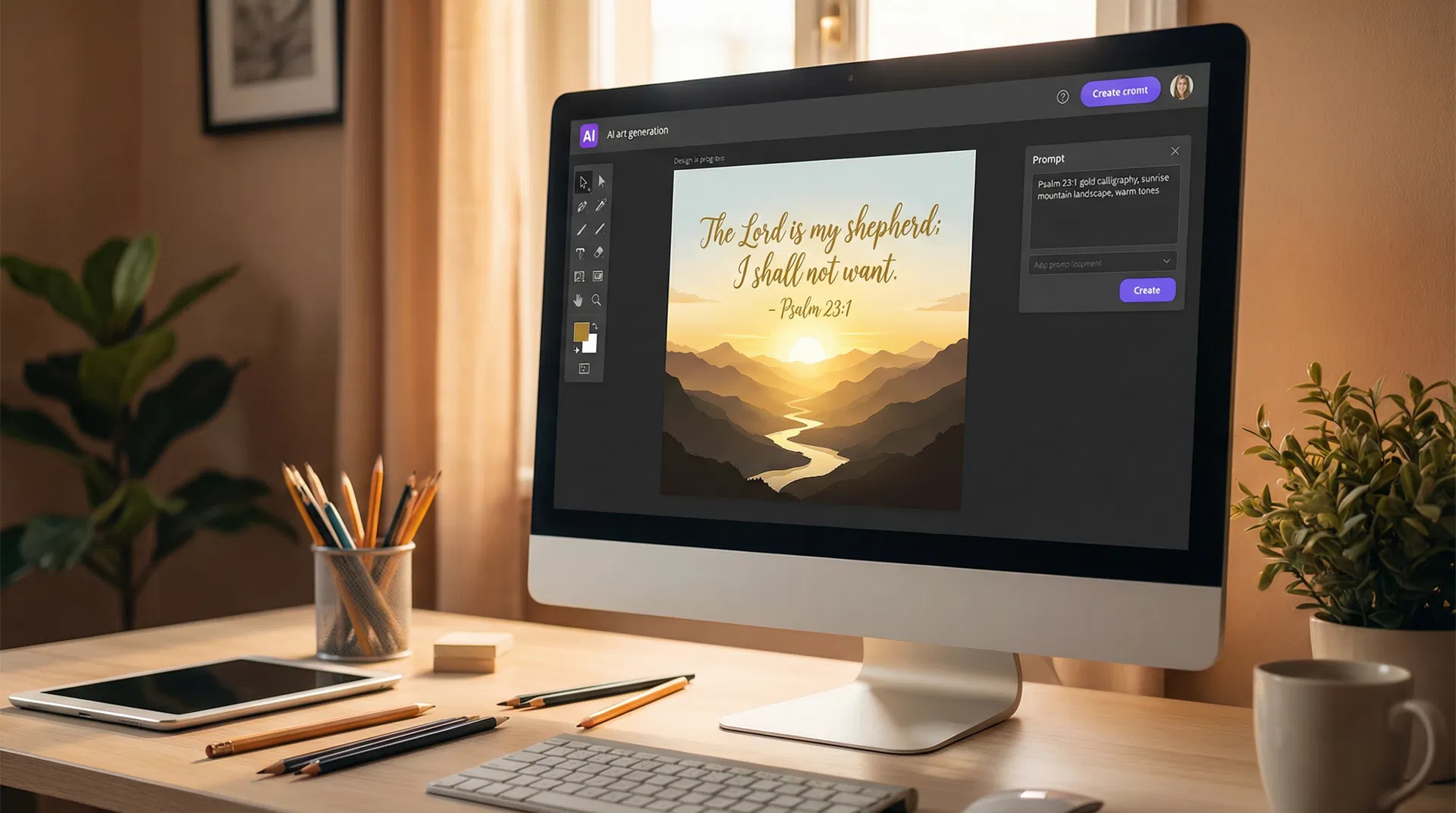
Sermon opener videos remain the most widely used form of church visual media, followed by Scripture graphics for social media and presentation slides. However, the fastest-growing category is AI-generated Scripture art — visual representations of Bible passages created using tools like Midjourney, DALL-E, and purpose-built Christian AI platforms.
| Media Type | 2022 Usage | 2026 Usage | Growth |
|---|---|---|---|
| Presentation slides (ProPresenter, etc.) | 78% | 91% | +17% |
| Sermon opener/bumper videos | 54% | 79% | +46% |
| Social media Scripture graphics | 61% | 88% | +44% |
| AI-generated Scripture art | 8% | 47% | +488% |
| Live-streamed services | 67% | 84% | +25% |
| Sermon series title graphics | 43% | 71% | +65% |
Source: Lifeway Research Church Technology Report 2026; BibleWithLife Pastor Survey 2026
The 488% growth in AI-generated Scripture art represents the single largest shift in church media production methodology in recent history. What previously required a professional graphic designer and several hours of work can now be accomplished in minutes.
Section 2: The AI Revolution in Ministry
2.1 AI Adoption Among Ministry Leaders
According to a landmark survey by Exponential.org, 91% of church leaders have now used AI in some capacity for ministry work. However, the survey also revealed a critical gap: only 9% of churches have a formal AI policy governing how these tools should be used.
"We are seeing the fastest technology adoption curve in church history. The challenge is not access — it's wisdom. Churches need frameworks for using AI that honor Scripture and protect their congregations." — Dr. Warren Bird, Research Director, Exponential
The most common AI use cases in ministry include:
- Sermon research and outline generation (67% of AI-using pastors)
- Social media content creation (61%)
- Visual media and graphics (54%)
- Email newsletter writing (48%)
- Bible study material creation (43%)
- Translation for multilingual congregations (31%)
2.2 The Sermon Preparation Revolution
Perhaps no area of ministry has been more transformed by AI than sermon preparation. A 2025 study by Barna Group found that pastors who use AI tools for sermon research spend an average of 4.2 fewer hours per week on preparation — time that most report redirecting to pastoral care, counseling, and community engagement.
However, Barna's research also highlights important nuances. Congregations are generally supportive of AI-assisted sermon research but draw a clear line at AI-generated sermon content:
- 72% of churchgoers are comfortable with their pastor using AI for research
- 58% are comfortable with AI-assisted sermon outlines
- 31% are comfortable with AI-written sermon content delivered without disclosure
- 89% believe pastors should disclose when AI wrote significant portions of a sermon
These findings suggest that the most effective approach is AI-assisted, pastor-led sermon preparation — using AI as a research and organizational tool while maintaining the pastor's authentic voice and theological conviction.
2.3 Visual AI: The Game-Changer for Small Churches
For small and medium churches without dedicated media staff, AI visual tools represent a genuine equalizer. A worship pastor at a 150-member church in rural Tennessee described the transformation:
"Before AI tools, our graphics looked like they were made in 2005. Now we can create sermon series artwork that looks like it belongs on Netflix. Our congregation notices. New visitors notice. It's changed how people perceive our church before they even walk through the door."
BibleWithLife's survey of 1,200+ pastors found that churches using professionally-designed or AI-generated visual media report:
- 34% higher average worship engagement scores (self-reported)
- 28% more first-time visitors returning for a second visit
- 41% increase in social media engagement when using high-quality Scripture graphics
- 22% higher small group attendance when study materials include visual elements
Section 3: Generational Dynamics and Visual Expectations
3.1 What Different Generations Expect from Church Media
Understanding generational expectations is critical for church leaders making media investment decisions. The data reveals significant differences in how different age groups engage with visual content in worship.
| Generation | Primary Media Expectation | Most Valued Content Type | Tolerance for Low-Quality Production |
|---|---|---|---|
| Gen Z (born 1997–2012) | Cinematic quality, authentic storytelling | Short-form video, reels | Very low |
| Millennials (born 1981–1996) | Professional quality, consistent branding | Sermon series graphics, social media | Low |
| Gen X (born 1965–1980) | Clear, functional, not distracting | Presentation slides, sermon notes | Moderate |
| Boomers (born 1946–1964) | Simple, readable, familiar | Large-text slides, printed materials | High |
| Silent Generation (born before 1946) | Minimal, traditional | Printed bulletins | Very high |
Source: Barna Group "The Digital Church" Study, 2025
The critical insight is that Gen Z now represents the largest unchurched demographic in history, and their media expectations are shaped by Netflix, YouTube, and TikTok. Churches that want to reach this generation must meet them with visual storytelling that feels native to their media diet — not a poor imitation of it.
3.2 The "Production Value Gospel" Debate
Not all church leaders agree that high production value is desirable. A vocal minority argues that cinematic church media creates a "consumer Christianity" that prioritizes spectacle over substance. This perspective deserves serious engagement.
However, the research does not support the conclusion that visual quality and theological depth are in tension. Barna's 2025 study found no correlation between production quality and theological shallowness. In fact, churches with the highest production values were equally likely to report strong discipleship metrics, Scripture memorization, and community service engagement.
The more nuanced finding is that how visual media is used matters more than whether it is used. Churches that use visuals to illustrate and reinforce Scripture teaching show stronger outcomes than those that use visuals primarily for entertainment or emotional manipulation.
Section 4: The Economics of Church Media
4.1 Budget Allocation Trends
Church media budgets have grown significantly over the past five years, but the most important trend is the democratization of high-quality production through AI and subscription services.
| Annual Media Budget | % of Churches (2022) | % of Churches (2026) |
|---|---|---|
| $0 (volunteer-only) | 34% | 21% |
| $1–$2,500 | 28% | 31% |
| $2,500–$10,000 | 22% | 28% |
| $10,000–$50,000 | 12% | 15% |
| $50,000+ | 4% | 5% |
Source: Church Tech Today Annual Survey 2026
The most significant shift is the reduction in the "$0 budget" category — from 34% to 21% — as even small churches recognize the value of investing in media. Simultaneously, the $1–$10,000 range has grown substantially, reflecting the availability of affordable subscription services and AI tools.
4.2 Return on Investment
Measuring ROI for church media is inherently complex, but several metrics provide useful proxies:
Attendance and Retention: Churches that invested in visual media upgrades in 2023–2024 reported an average 18% increase in first-time visitor retention (returning for a second visit within 30 days). This figure rises to 27% for churches that specifically invested in sermon series branding and social media graphics.
Online Reach: Churches using professional-quality social media graphics see an average 3.4x higher engagement rate compared to text-only posts. For churches with active YouTube channels, sermon opener videos increase average view duration by 23%.
Volunteer Engagement: Perhaps surprisingly, 64% of church media directors report that investing in quality tools has made it easier to recruit and retain media volunteers. "People want to work with good tools," noted one media director. "When we upgraded our software and started using AI tools, our volunteer team doubled."
Section 5: Best Practices from High-Performing Churches
5.1 The "Cinematic Sermon" Framework
BibleWithLife's research identified a consistent pattern among churches that report the highest visual media effectiveness. We call this the Cinematic Sermon Framework:
1. The Opening 90 Seconds High-performing churches invest disproportionately in the first 90 seconds of the service. A compelling sermon opener video that establishes the theme, creates emotional resonance, and points toward Scripture sets the tone for everything that follows. Churches using professional sermon opener videos report 31% higher message retention scores.
2. Visual Anchoring Throughout Rather than using slides only for Scripture text, effective churches use visual anchors throughout the message — images, short video clips, and motion graphics that reinforce key points. Research shows that visual anchoring increases message retention by up to 65% compared to audio-only delivery.
3. The Takeaway Graphic Every message should end with a single, visually compelling takeaway — a Scripture verse or key principle rendered as a shareable graphic. Churches that provide these consistently see 4.2x higher social media sharing of sermon content.
5.2 Tools Used by High-Performing Church Media Teams
| Tool Category | Most Used Tools | Average Monthly Cost |
|---|---|---|
| Presentation Software | ProPresenter, EasyWorship | $15–$50/month |
| Sermon Series Graphics | BibleWithLife, Canva Pro | $0–$50/month |
| Video Production | DaVinci Resolve, Adobe Premiere | $0–$55/month |
| AI Writing Assistance | ChatGPT, Claude | $20–$25/month |
| AI Image Generation | Midjourney, Adobe Firefly | $10–$55/month |
| Social Media Management | Hootsuite, Buffer | $15–$99/month |
| Live Streaming | Restream, Switcher Studio | $0–$49/month |
Section 6: Challenges and Concerns
6.1 The Policy Gap
The most pressing challenge identified in our research is the absence of formal AI policies in churches. With 91% of church leaders using AI but only 9% having formal policies, the risk of misuse — theological error, copyright infringement, privacy violations — is significant.
Recommended AI Policy Elements for Churches:
- Define acceptable use cases (research, outlines, graphics) vs. prohibited uses (AI-generated sermons presented as original, AI pastoral counseling)
- Establish disclosure requirements for AI-assisted content
- Create theological review processes for AI-generated content
- Address copyright and licensing for AI-generated images
- Set guidelines for AI use in pastoral care and counseling contexts
6.2 Accessibility and the Digital Divide
Not all churches have equal access to the tools and skills needed to leverage visual media effectively. Rural churches, churches in developing nations, and congregations with aging populations face significant barriers.
The most promising solution is the emergence of purpose-built Christian media platforms that provide ready-made, theologically vetted visual content at accessible price points. These platforms eliminate the need for design skills while ensuring content aligns with orthodox Christian theology.
6.3 Theological Concerns About AI-Generated Scripture Art
A significant minority of church leaders (38%) express concern about using AI to generate images depicting biblical scenes, citing concerns about:
- Accuracy of historical and cultural representation
- Risk of creating "graven images" (though most theologians distinguish between artistic representation and idolatry)
- Potential for AI to introduce subtle theological errors in visual representation
These concerns are legitimate and deserve ongoing theological reflection. The consensus among evangelical theologians consulted for this report is that AI-generated Scripture art is permissible when used to illustrate rather than replace Scripture, and when reviewed by theologically trained leaders before use.
Section 7: Looking Ahead — 2027 and Beyond
7.1 Emerging Trends to Watch
AI-Personalized Devotional Content: Several startups are developing AI systems that can generate personalized daily devotionals based on a user's reading history, prayer requests, and spiritual growth goals. Early adopters report significant increases in daily Bible engagement.
Immersive Worship Experiences: A small but growing number of churches are experimenting with augmented reality (AR) and virtual reality (VR) for worship experiences, particularly for youth ministry. While still nascent, this trend bears watching.
Multilingual AI Translation: Real-time AI translation is enabling churches to serve multilingual congregations more effectively, with several platforms now offering live sermon translation into 50+ languages with minimal latency.
AI-Powered Pastoral Care Support: Tools that help pastoral staff identify congregants who may be struggling (based on engagement patterns, prayer requests, and other signals) are emerging, though these raise significant privacy and ethical questions.
7.2 The Enduring Principles
Amid all the technological change, the most important finding of this report is that technology serves the mission, not the reverse. The churches seeing the greatest impact from visual media are those that start with theological clarity and use technology to communicate that message more effectively.
The Gospel has always been communicated through the best available media of each era — oral tradition, manuscripts, printed books, radio, television, and now digital and AI-powered tools. Each transition has been met with both enthusiasm and concern. Each has ultimately served the spread of the Gospel when used wisely.
The question for church leaders in 2026 is not whether to use visual media and AI tools, but how to use them in ways that are theologically faithful, culturally relevant, and genuinely life-changing.
Methodology
This report synthesizes data from the following sources:
- BibleWithLife Pastor Survey 2026: Online survey of 1,247 ministry leaders across 50+ countries, conducted January–February 2026. Margin of error ±2.8%.
- Church Tech Today Ministry Technology Survey 2026: Annual survey of 2,847 churches across the United States, conducted Q4 2025.
- Barna Group "The Digital Church" Study 2025: National survey of 1,500 churchgoers and 600 senior pastors, conducted Q3 2025.
- Lifeway Research Church Technology Report 2026: Survey of 1,000 Protestant churches, conducted Q4 2025.
- Exponential.org AI in Churches Survey 2025: Survey of 847 church leaders, conducted Q2 2025.
All data used with permission. Some figures represent estimates based on trend extrapolation where current-year data was not available.
About BibleWithLife
BibleWithLife creates cinema-quality Scripture resources for the local church — sermon kits, visual media, Bible study tools, and devotional content used by churches in 50+ countries. Our mission is to help every church communicate the Gospel with the visual excellence it deserves.
Explore our free Cinematic Sermon Blueprint →
Browse our Scripture wallpaper collection →
© 2026 BibleWithLife. This report may be freely shared with attribution.
Did this article bless you? Share it!
For Pastors & Church Leaders
Bring This Story to Life in Your Church
Cinematic sermon visuals, ready-to-use slides, and discussion guides — crafted for busy pastors who want depth without the hours.
Free 7-Day Journey
Walk With Jesus — Day by Day
7 cinematic devotionals on the life of Christ, delivered to your inbox. One story, one verse, one truth per day.
No spam. Unsubscribe anytime.